Physical Address
304 North Cardinal St.
Dorchester Center, MA 02124
Physical Address
304 North Cardinal St.
Dorchester Center, MA 02124

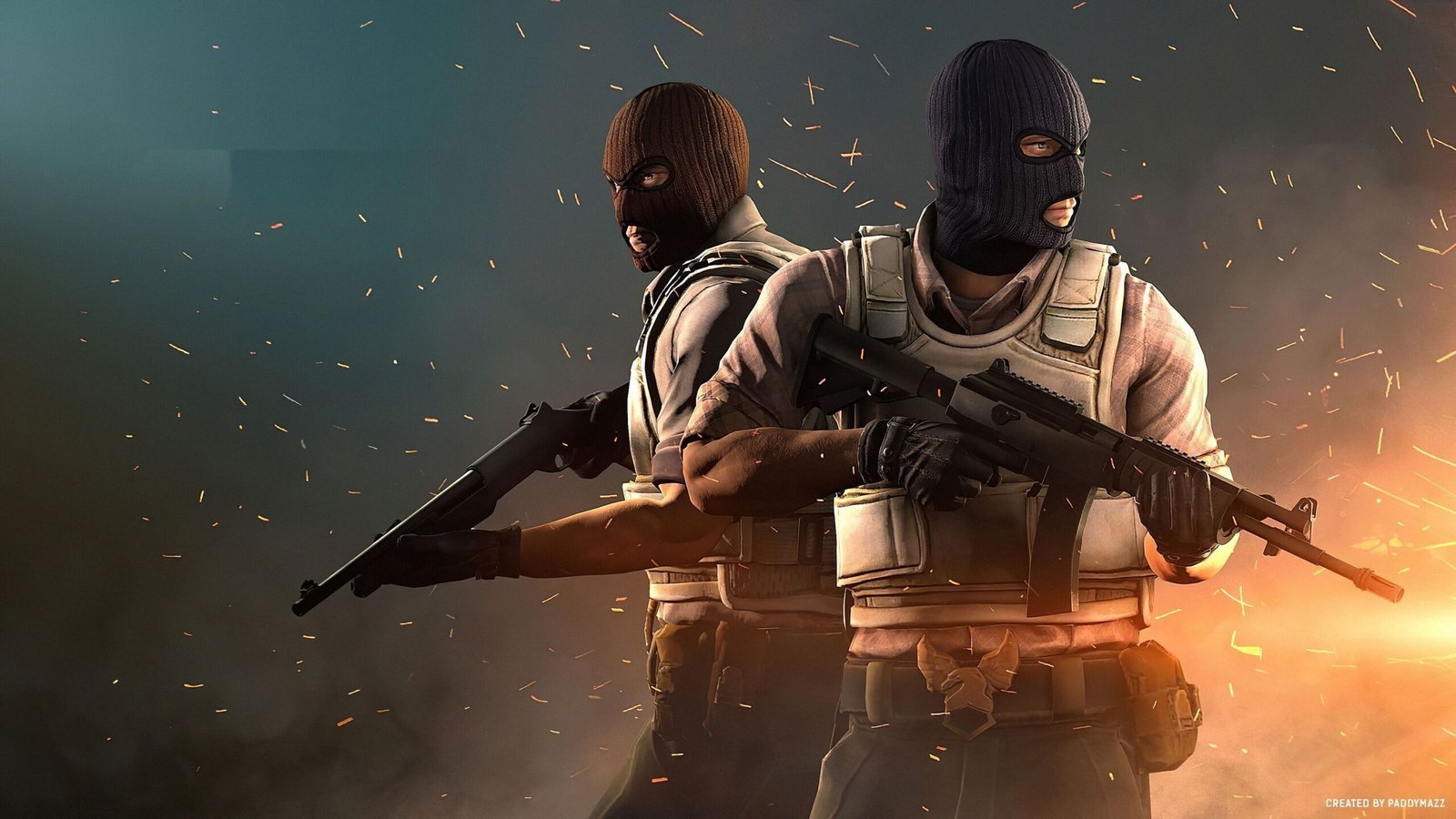
Looking for the best tactical shooters like Counter-Strike 2 to play in 2026? While Valve’s iconic FPS defined the genre, many new titles offer similar 5v5 competitive play, precise gunplay, and strategic bomb-defusal modes. In this guide, we break down the top 20 games that CS2 fans are switching to this year. We’ve categorized them by realism, difficulty, and unique features—ensuring that whether you want a direct rival like Valorant or a hardcore simulation like Escape from Tarkov, you’ll find your next obsession here.
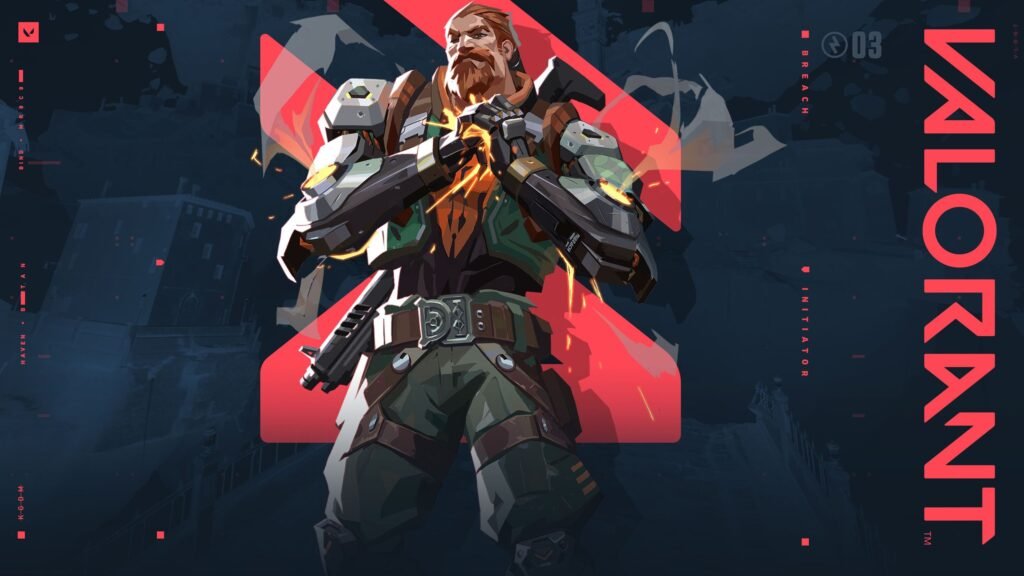
Since its release, Valorant has been the primary destination for CS2 players looking for a change. At its core, it is a “carbon copy” of the Counter-Strike loop: you play in 5v5 teams, manage a round-based economy, and aim to plant or defuse a bomb (called the “Spike”). However, the depth of Valorant lies in its Agent System. Unlike CS2, where every player has access to the same smokes and flashes, Valorant divides these utilities among specific roles: Duelists, Sentinels, Initiators, and Controllers. Check this list of games like Valorant.
For a CS2 veteran, the most jarring difference—and eventually the most rewarding—is how utility interacts with the environment. Smokes aren’t just grey orbs; they can be hollow, they can decay your health, or they can be placed globally across the map. The gunplay is slightly more “forgiving” in terms of movement error, but the headshot lethality remains just as punishing. You will find analogues for your favorite weapons, such as the Vandal (AK-47) and the Operator (AWP). While CS2 relies on “perfecting the basics,” Valorant relies on “solving the puzzle” of enemy abilities. In 2026, with a massive roster of over 25 agents, the strategic combinations are infinite, making it a game where your brain is just as important as your aim.
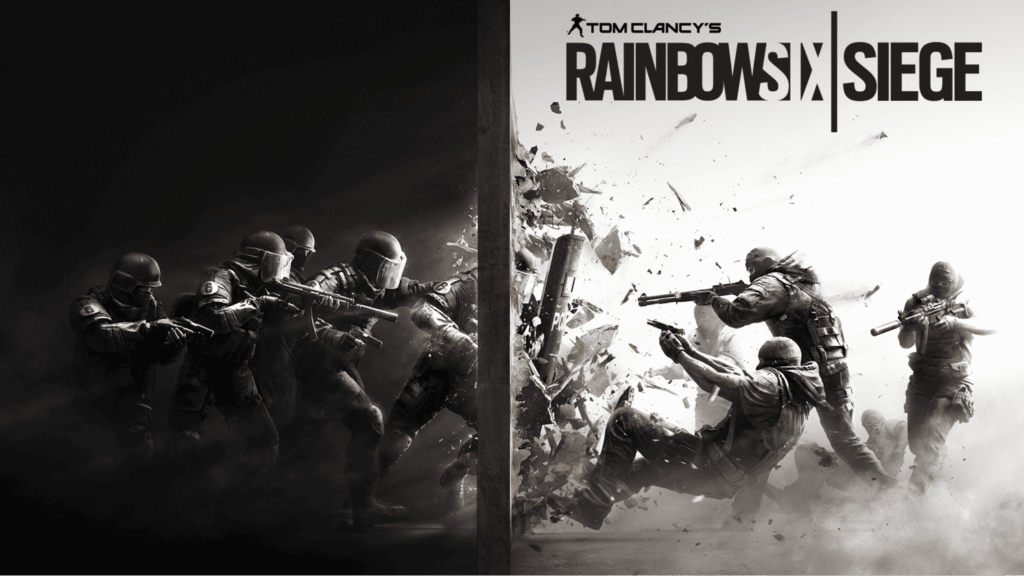
Rainbow Six Siege represents the “thinking man’s” tactical shooter. While CS2 is played on a horizontal plane with fixed walls, Siege is a 3D sandbox of destruction. Every floor can be breached, every ceiling can be opened, and every wall is a potential door. As a CS2 player, you are used to “checking corners,” but in Siege, you have to check atmospheres. The game replaces the “Search and Destroy” rush with a high-stakes game of hide-and-seek using drones and cameras.
The learning curve is significantly steeper than CS2 because map knowledge isn’t just about knowing where the “A-Long” is; it’s about knowing which specific floorboard you can shoot through to kill a defuser from the room below. The “One-Shot Headshot” mechanic is universal here—even the weakest pistol can kill a fully armored giant with a single bullet to the face. This creates a level of tension that even CS2 struggles to match. In 2026, the game has evolved to include advanced electronic warfare, where hackers can steal enemy camera feeds and defenders can deploy “bulletproof” gadgets. If you love the “clutch” feeling of CS2 but want a game where you can use the building itself as a weapon, Siege is the ultimate evolution.
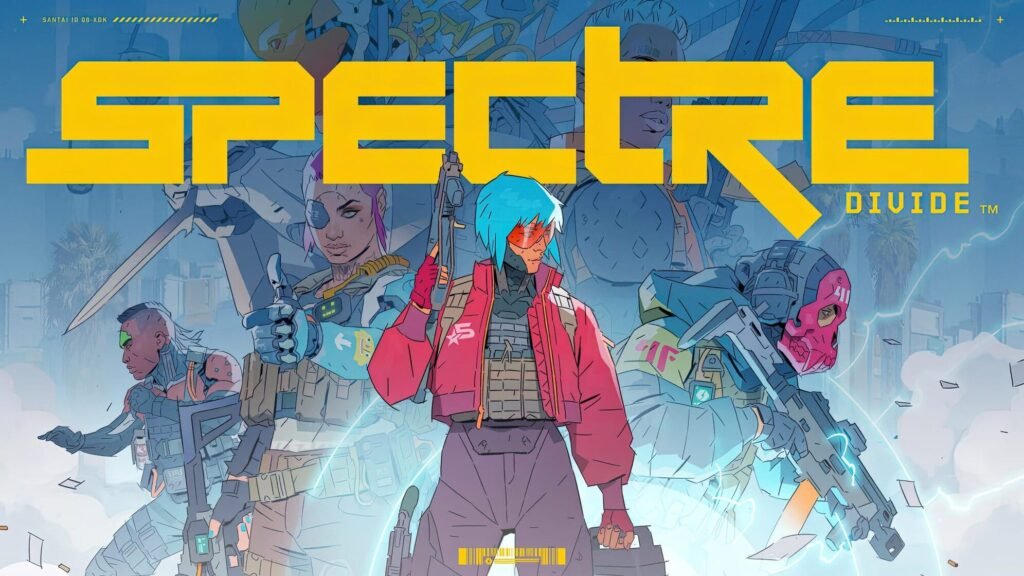
Spectre Divide is the newest “Aim-Down-Sights” (ADS) tactical shooter, and it’s specifically designed for people who find the 5v5 format of CS2 too reliant on random teammates. In this 3v3 game, every player controls two separate bodies: your “main” and your “Spectre.” You can swap between them at the press of a button, effectively allowing you to play your own “trade frag.” If you die in one body, you instantly “zip” to the other, giving you a second chance in every round.
From a mechanical standpoint, it feels like a hybrid of Counter-Strike and Apex Legends. The gunplay is incredibly tight, but unlike CS2, you are encouraged to use your sights (ADS) for maximum accuracy. The “Duality” mechanic allows for mind-bending strategies that would be impossible in CS2. You can leave one body at the A-site and push B with the other, then “warp” back to A the moment you hear a footstep. This removes the frustration of “getting timing’d” or being caught with your knife out. For the CS2 veteran, it offers a fresh tactical puzzle: how do you defend a site when the enemy can literally be in two places at once? It is the most innovative competitive shooter to hit the market in years.
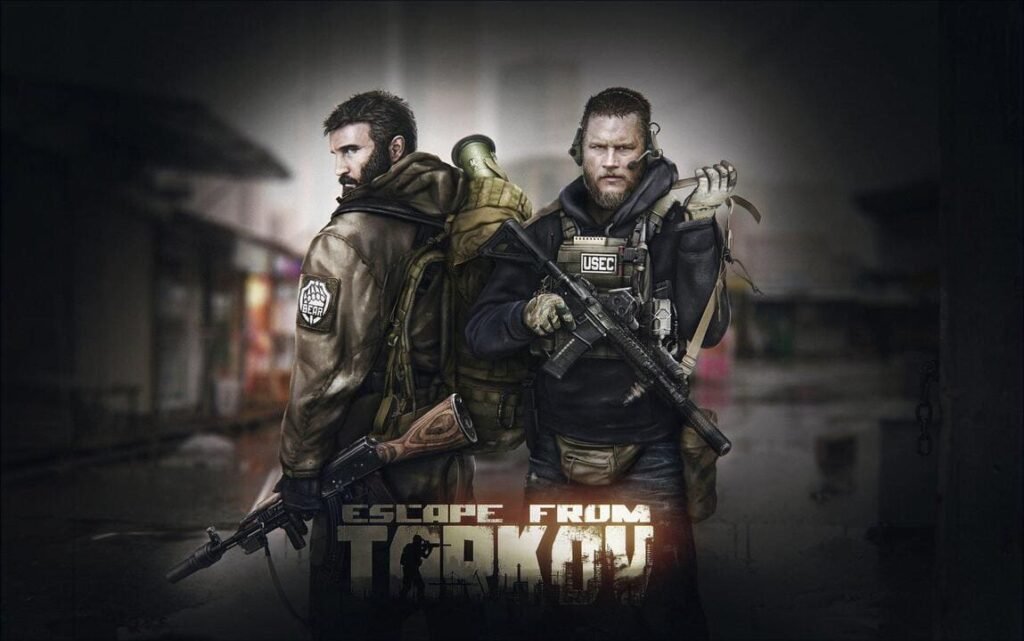
If you think losing a $4,700 AWP in CS2 is painful, Escape From Tarkov will redefine your definition of “stress.” Tarkov is not a round-based game; it is an “extraction” shooter where you enter a massive map, find loot, and try to reach an exit. If you die, every single item you were carrying—your gun, your armor, your backpack, and the rare items you found—is gone forever. This “Gear Fear” creates a level of immersion that makes your heart race every time you hear a twig snap in the woods.
The gunplay is the most realistic on the market. Every weapon can be stripped down to its smallest screw and rebuilt with hundreds of real-world attachments. As a CS2 player, you’ll appreciate the ballistics; bullets don’t just “hit” or “miss.” They penetrate different classes of armor, fragment inside limbs, and cause bleeds that must be bandaged in real-time. The economy is also far more complex, involving a player-driven “Flea Market” and traders who give you quests. By 2026, Tarkov has expanded into a seamless open-world experience, making it the most hardcore “survival” version of the tactical shooter genre. It is the perfect home for the CS2 player who wants to turn their tactical knowledge into a literal fight for survival.
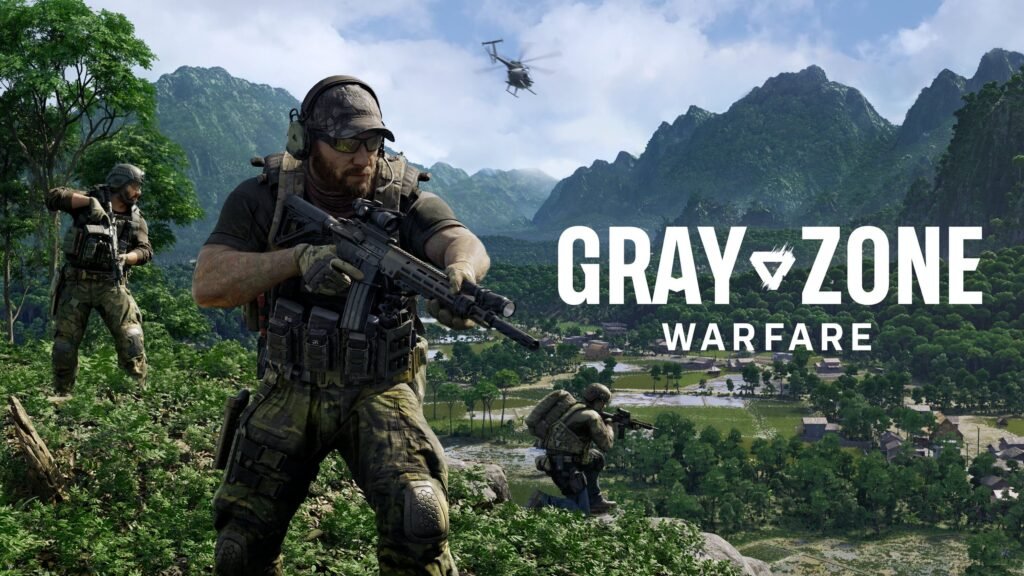
If Counter-Strike 2 is a game of “inches” played in closed corridors, Gray Zone Warfare (GZW) is a game of “miles” played in a sprawling, photorealistic jungle. Released by Madfinger Games and receiving massive updates throughout 2025 and into 2026, this title has carved out a unique space between the hardcore extraction of Tarkov and the massive scale of Arma. For a CS2 player, the most immediate shock is the environment. You aren’t defending a bomb site; you are part of a Private Military Company (PMC) deployed to a 42km² Southeast Asian island to recover intel and survive against both AI insurgents and rival player factions.
The mechanical connection to CS2 is found in the precision and lethality. GZW uses a “Body-Sim” health system that makes CS2’s health bar look like an arcade game. In GZW, there is no generic 100 HP. If you get shot in the arm, your aim sways; if you get shot in the leg, you limp; and if a bullet hits a vital organ or a major artery, you will bleed out in seconds unless you apply the correct medical treatment. This creates a “slow-burn” tension. You might spend twenty minutes trekking through a beautiful, Unreal Engine 5-rendered jungle only for a single, well-placed shot from a hidden player to send your team into a frantic tactical retreat.
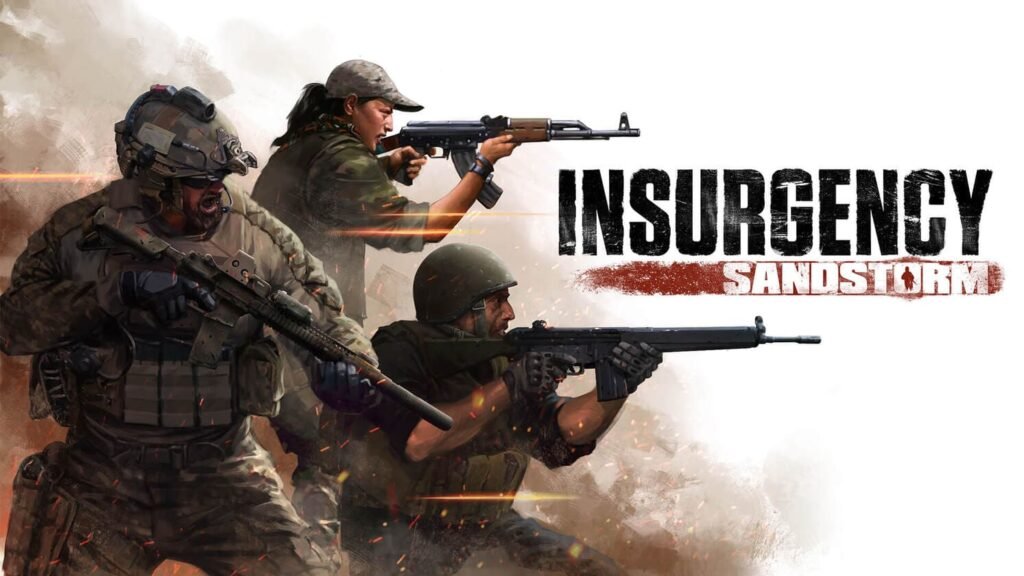
Insurgency: Sandstorm sits in the “Goldilocks zone” between the arcade speed of CS2 and the brutal realism of Tarkov. It is a game that treats war with a terrifying level of respect. There is no kill-feed, no crosshair, and almost no HUD. You have to manually check your magazine to see how many bullets are left, and the sound of an A-10 Warthog strafing run overhead is enough to make you duck in real life.
The game mirrors CS2’s “Push” and “Firefight” modes but increases the scale. Instead of 5v5, you are often playing 14v14 or 10v10, which creates a front-line feeling that CS2 lacks. The “TTK” (Time to Kill) is incredibly low; most rifles will kill in one or two shots to the chest. This forces you to use “Smoke Mortars” and “Chemical Gas” to move through streets, making utility even more vital than it is on a map like Inferno. For a CS veteran, the transition is easy because the “feel” of the rifles is heavy and mechanical. However, the lack of “jump-shooting” or “crouch-sliding” ensures that the game remains a pure tactical experience where positioning and “slicing the pie” on a doorway are the only ways to stay alive.
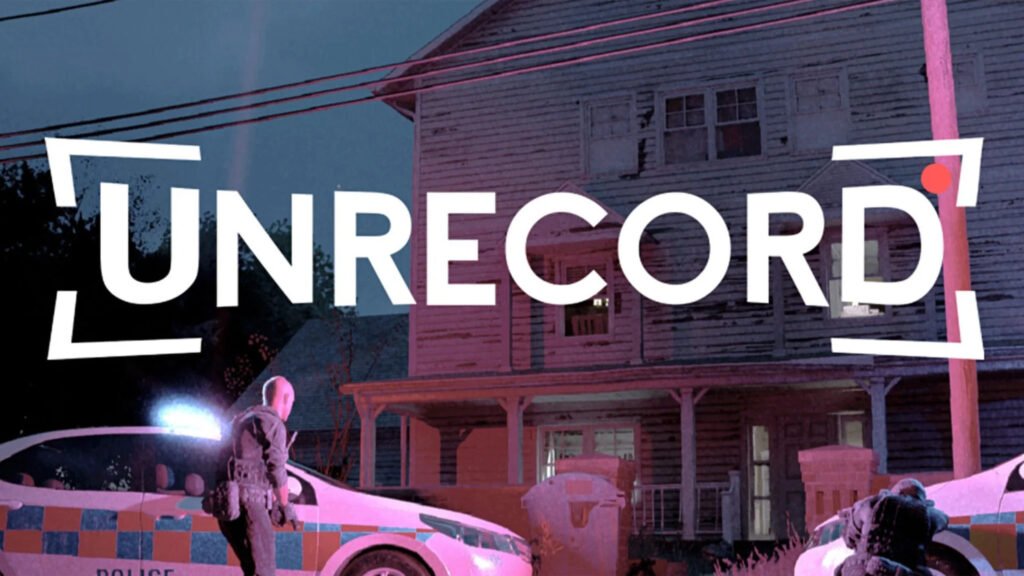
When the first trailers for Unrecord went viral, the gaming world couldn’t believe it was real gameplay. By 2026, this “bodycam” shooter has moved from a technical demo to a full-scale tactical experience. The game is played through the perspective of a police officer’s body-worn camera, creating a level of immersion—and nausea-inducing realism—that makes the “clean” look of CS2 feel like a cartoon. For a CS2 veteran, the most challenging part of Unrecord isn’t the shooting; it’s the spatial awareness. The camera sways, the lighting is harsh and realistic, and the fish-eye lens makes clearing a corner a terrifying ordeal.
The gunplay in Unrecord is unlike anything else on this list. It uses a “free-aim” system where your gun moves independently of your camera view, similar to older tactical shooters like Red Orchestra but modernized for 2026. This means you don’t just “flick” to a head; you have to physically align the barrel of the weapon in a 3D space. One shot is almost always lethal, and the “Search and Destroy” multiplayer mode is a slow, silent game of nerves where the first person to make a noise usually dies. If you love the “tactical” side of Counter-Strike—the slow crawls, the fake-outs, and the heart-pounding silence before a breach—Unrecord offers a hyper-realistic version of that fantasy that will push your PC and your nerves to their absolute limits.
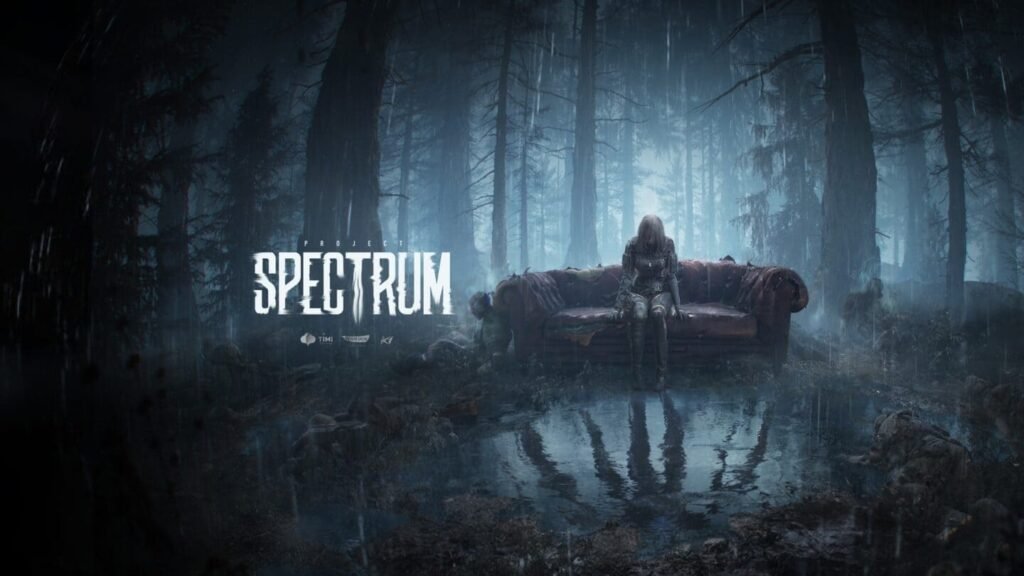
While Counter-Strike 2 moved the industry forward with “sub-tick” technology, Project Spectrum (launching in early 2026) is being built from the ground up to solve every complaint the competitive community has had with modern shooters. Developed by a team of former pro players and engineers from various “Big Three” FPS titles, Project Spectrum is a “purist” tactical shooter. It strips away the “clutter” of modern gaming—no battle pass pop-ups, no invasive skins that break visibility, and no complicated hero abilities. It is 5v5, round-based, and built on a proprietary engine designed for 0ms input lag.
For a CS2 player, the transition to Project Spectrum will feel like coming home to a “polished version of the past.” The recoil system uses a “Predictive-Dynamic” model; while there are set patterns to learn (similar to the AK-47 in CS), environmental factors like movement speed and stamina slightly alter the spread, rewarding players who have mastered counter-strafing. The game’s “Economy 2.0” system also introduces a “Team Bank” feature, allowing for more complex strategic buys that prevent the “randomness” often found in solo-queue CS matches. If you are a high-rank player who lives for the leaderboard and demands the highest possible competitive integrity, Project Spectrum is positioned to be the primary “CS-Killer” of 2026. It is a game made by the 1% for the 1%, focusing entirely on raw mechanical skill and tactical utility usage.
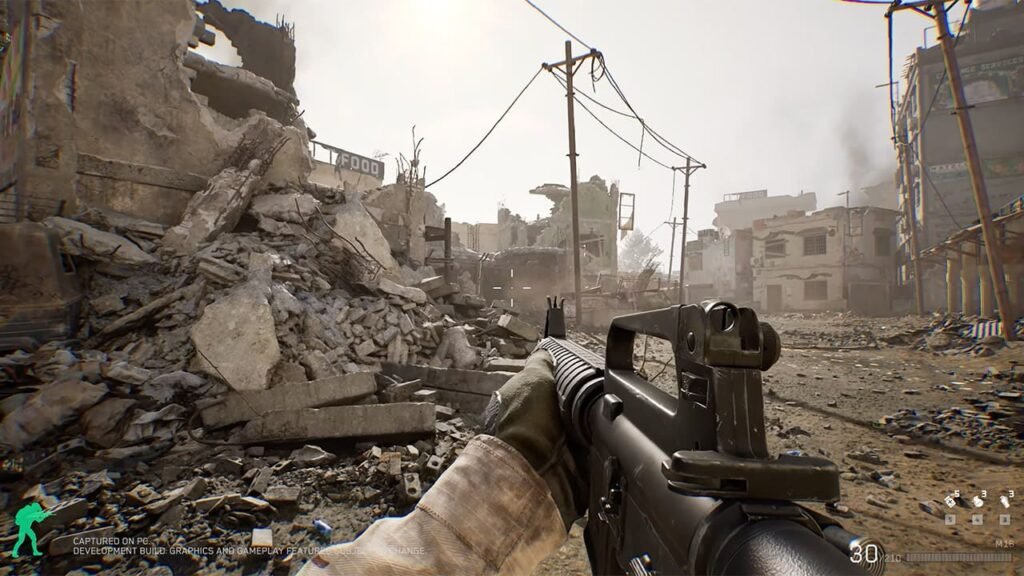
Delta Force: Hawk Ops is the 2026 revival of the classic franchise, and it has successfully bridged the gap between the “arcade” feel of Battlefield and the “tactical” feel of Counter-Strike. For the CS2 player who occasionally wants a larger scale without losing the “tightness” of competitive gunplay, the “Havoc Warfare” and “Hazard Operations” modes are perfect. The game features a class-based system, but unlike Valorant, the classes are grounded in military reality: Medics, Snipers, Engineers, and Assault.
What sets Hawk Ops apart for a CS2 fan is the weapon handling. The developers have spent an immense amount of time ensuring that the “feedback” of the weapons—the sound, the screen shake, and the physical pushback—feels “snappy” and responsive. In the extraction-style “Hazard Operations” mode, you’ll find the same economic tension as CS2, where you must decide whether to go in “light” with a cheap submachine gun or “full-buy” with a kitted-out assault rifle and heavy armor. The maps are designed with “tactical lanes,” ensuring that even in large-scale combat, you can use the same flanking logic and “crossfire” setups that you learned on maps like Dust 2 or Ancient. It is a high-budget, polished alternative for players who want a massive war-zone feeling without sacrificing the precision of a tactical shooter.
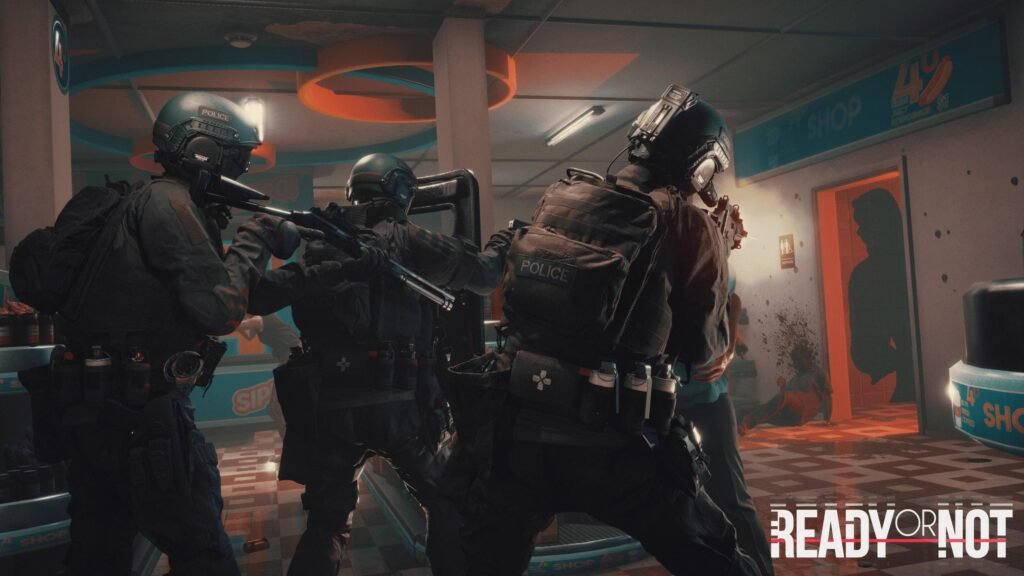
While Counter-Strike 2 focuses on the competitive friction between two human teams, Ready or Not takes the “Search and Destroy” mechanics and applies them to a terrifyingly realistic PvE (Player vs. Environment) setting. You play as a member of an elite SWAT team tasked with diffusing high-stakes hostage situations, active shooters, and barricaded suspects. For a CS2 veteran, the appeal here is the perfection of the “Breach and Clear.” In CS2, you might flash a corner and wide-swing; in Ready or Not, that kind of recklessness will get your entire squad killed in seconds.
The game demands a level of coordination that makes Global Elite matchmaking look like child’s play. You have to manage your “Rules of Engagement” (ROE), meaning you can’t just shoot everything that moves—you must identify threats, shout for surrender, and use non-lethal force when possible. However, when the bullets do start flying, the gunplay is incredibly “heavy” and precise. The armor-penetration system and the way projectiles ricochet off different surfaces are handled with extreme realism. By 2026, the “Home Invasion” and “Internal Affairs” expansions have added deep narrative layers and even more complex maps, ranging from sprawling nightclubs to cramped, trap-filled underground bunkers. If you love the tactical discipline of CS2 but want a break from the toxicity of competitive queues, this is the ultimate “squad night” game.
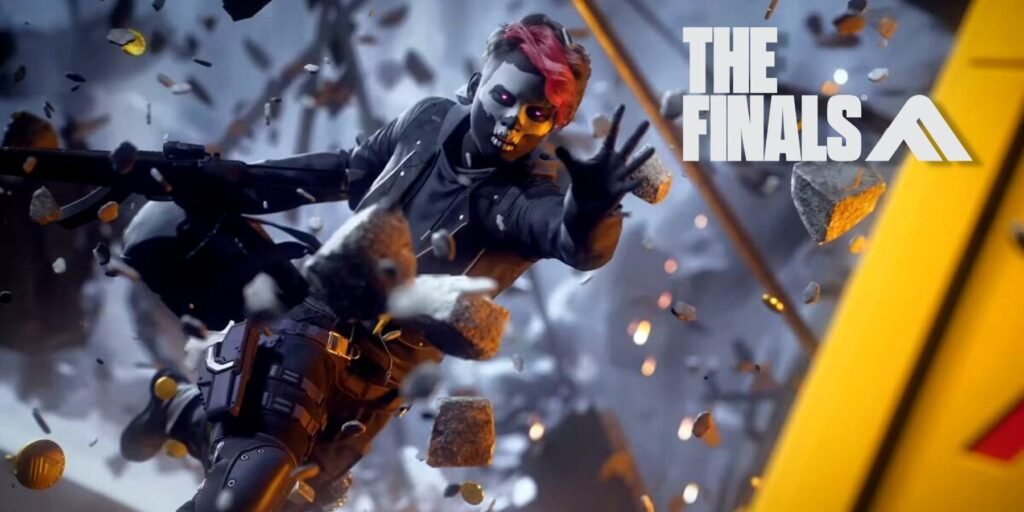
If you ever felt frustrated that a wooden door in Counter-Strike was an indestructible wall, The Finals is the antidote. Developed by ex-DICE veterans (the original creators of Battlefield), this game is a “Combat Gameshow” where everything—literally everything—can be destroyed. While the movement is much faster than CS2, the core of the game is built on “Cashout” objectives that mirror the tension of defending a bomb site. In a 3v3v3 or 3v3v3v3 format, you must steal a vault, bring it to a station, and defend it while other teams try to level the building you are standing in.
For a CS2 player, the “clutch factor” is higher here than in almost any other shooter. Because the environment is fully server-side destructible, you can’t just memorize “headshot angles.” An enemy team might use C4 to blow the floor out from under you, dropping the objective (and you) into a different room entirely. The gunplay is crisp and rewards high-accuracy tracking, especially since the Time-to-Kill (TTK) is higher than the “one-tap” nature of CS. However, the strategic use of utility—goo grenades to build walls, gas mines to deny entry, and jump pads for verticality—will satisfy the “utility-brain” of any high-level CS player. By 2026, The Finals has established itself as the premier “High-Octane” tactical alternative, proving that strategy isn’t just about standing still; it’s about managing chaos.
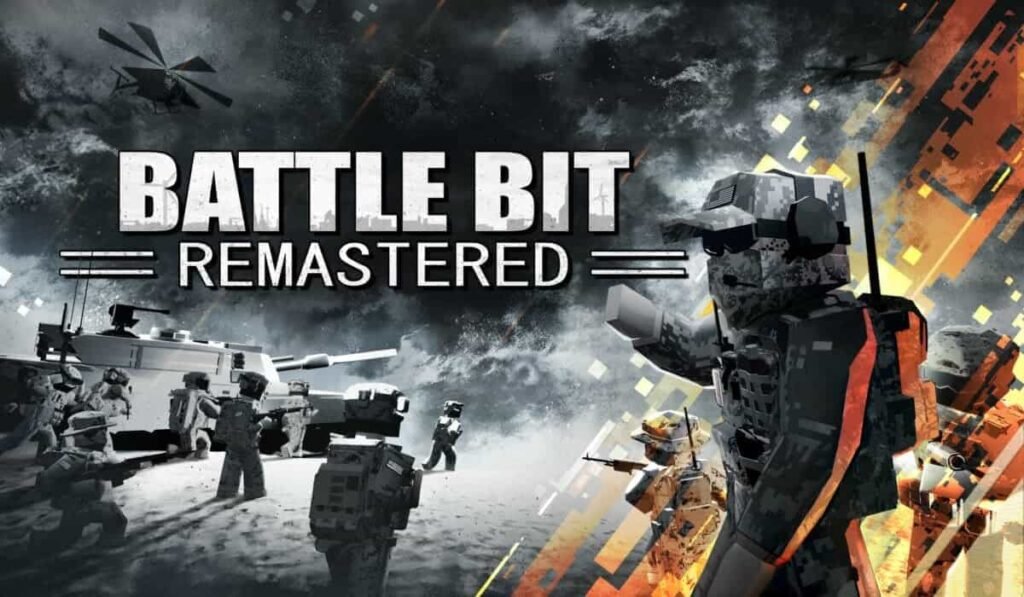
Don’t let the “Low-Poly” (blocky) graphics fool you—Battlebit Remastered is more of a “tactical shooter” than most $70 AAA titles. It was built by a tiny team with one goal: to create a massive-scale shooter (127v127) that runs at 200+ FPS on almost any computer. For the CS2 player who values frame data and input latency above all else, Battlebit is a dream come not. The gunplay is surprisingly hardcore, featuring a magazine-management system where you have to manually check your ammo and combine partially used mags, much like in Tarkov or Squad.
The reason this belongs on a CS2 list is the community and communication. Much like the early days of Counter-Strike: Source, Battlebit relies heavily on Proximity Voice Chat. You’ll find yourself coordinating with 50 strangers to hold a single bridge or clear a skyscraper. The destruction is massive, the weapon customization is deep, and the “snappiness” of the movement feels closer to the Source engine than the “heavy” feeling of modern Call of Duty. In 2026, with the “Global Operations” update, the game has added smaller 5v5 and 10v10 “Competitive” modes that strip away the vehicles and focus purely on infantry tactics and aim. It is the perfect game for the “performance purist” who wants the scale of a war movie with the precision of a competitive shooter.
While Counter-Strike 2 will likely always remain the gold standard for tactical shooters, the landscape in 2026 has proven that there is plenty of room for innovation. Whether you are looking for the hyper-realism of Unrecord, the ability-driven chaos of Valorant, or the massive-scale destruction of The Finals, the “tactical” genre has never been more diverse.
The most important thing to remember as you transition from CS2 to any of these titles is that patience is your greatest weapon. Every game on this list rewards map knowledge and team communication over raw “aim-bot” reflexes. While your AK-47 spray pattern might not carry over to Gray Zone Warfare, your ability to keep a cool head in a 1v1 clutch certainly will.
Are you sticking with the king or moving on to a new challenge? We want to hear from you!
Drop a comment below and tell us which game from this list you’re downloading first. Don’t forget to share this post with your duo-partner so you can start grinding a new rank together tonight!